Showing posts with label Yinyuan. Show all posts

Saturday, July 11, 2020

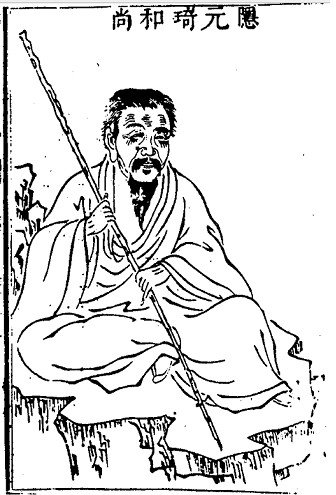
Yinyuan's Biography in Sand Painting

This is a rare presentation of Yinyuan Longqi's biography by the sand artist Cai Xiaohua 蔡曉華 and her team.


砂畫:蔡曉華。解說:黑木 真二。

Saturday, May 30, 2020

Brushing against flowers, fragrance permeates garments (弄花香滿衣) by KŌSEN Shōton 高泉性潡

https://www.ngv.vic.gov.au/explore/collection/work/54114/


Medium: ink on paper
Measurements:132.0 × 30.2 cm (image and sheet)
Place/s of Execution: Japan
Inscription: stamped in red ink u.r.: (artist’s seal)
inscribed in brush and ink c.l.: 曇華道人書
stamped in red ink l.l.: 黄檗性潡
stamped in red ink l.l.: 高泉
Accession Number: AS9-1992 DepartmentAsian Art
Credit Line: National Gallery of Victoria, Melbourne
Purchased through The Art Foundation of Victoria with the assistance of Pacific Dunlop Limited, Fellow, 1992
This digital record has been made available on NGV Collection Online through the generous support of The Gordon Darling FoundationGallery location
Level 1, NGV International


Saturday, April 4, 2020

2013 Obaku Study Tour Essays in Chinese and Japanese


I am glad that my report on my 2013 visit to Japan have been published in both Chinese and Japanese. Thanks for many people who have helped me during the trip and for publishing and translating my essay.

Note: 黄檗参学記(和訳) : 隠元禅師ゆかりの寺院を巡って Translated by Yang Kuei Hsiang 楊桂香,  Hayashi Masako 林正子, and Tanaka Shōzō 田中昭三. Obaku Bunka 黄檗文華 (135): 223-204, 2015. (Translated from Chinese)            

Tuesday, June 26, 2018

Old Photos of Wanfu Monastery 万福寺 in Fuqing 福清, China (1)

Yinyuan Hall photo by Jiang Wu
I did some field work in Wanfu Monastery in Fuqing in 2000. Because the temple is in the process of rebuilding and the older structure may not be preserved, I posted a few pictures I took almost twenty years ago.
Tombs photo by Jiang Wu

Feiyin's Memorial Pagoda, photo by Jiang Wu

Yinyuan Hall photo by Jiang Wu


Sunday, April 15, 2018

Calligraphy of Muan (1611 - 1684)木菴性瑫 at Philadelphia Museum of Art

http://www.philamuseum.org/collections/permanent/303399.html?mulR=980253270|2


Original Patriarch Daruma Daishi

Mokuan Shōtō, Chinese, 1611 - 1684

Geography:
Made in Japan, Asia
Period:
Edo Period (1615-1868)
Date:
Mid- 17th century
Medium:
Ink on paper, mounted as a hanging scroll
Dimensions:
Exclusive of mount: 55 × 11 1/2 inches (139.7 × 29.2 cm)
Curatorial Department:
East Asian Art
Object Location:
Currently not on view

Accession Number:
2008-87-1
Credit Line:
Purchased with funds donated by Andrea M. Baldeck, M.D., and William M. Hollis, Jr., 2008

Label:
Mokuan was the second patriarch of the Japanese Obaku Zen sect, which still has its headquarters at Mampuku-ji, a Chinese-style temple located at Uji, near Kyoto. He emigrated to Japan from Fukien, China in 1655. The following year he assisted the first patriarch, Ingen (1592 - 1673) in founding Mampuku-ji, and Mokuan became the second abbot in 1664.

The six characters inscribed on this hanging scroll translate to "the first patriarch Daruma." This is a reference to the founder of Zen Buddhism in India, whose name is pronounced "Daruma" in Japanese. Mokuan may have also meant this phrase to serve as an homage to Ingen (as the first patriarch of the Obaku sect in Japan).

Mokuan was renowned during his lifetime for his outstanding calligraphy, with its strong, thick brushstrokes and subtle gradations of ink. As in this one line calligraphy, the even spacing and rounded characters have a powerful yet elegant effect, balanced by the wiry, angular signature at the left.

Tuesday, April 3, 2018

Article on Yinyuan's Seals


An article was published in a recent issue of Religions in China. Details are not known about the author and the article.

  • 佛心禅境 高僧隐元的墨迹用印
  • Author / Creator:马旭明
  • Summary:隐元印章的篆法雕刻、印文排列,完全是明末清初时期的风格气息,从印面看篆刻刀法工整,章法对称平直而合乎法度,印文多作小篆,或以小篆掺和大篆。一明末禅宗盛极一时,著作丰富,人才辈出。临济宗一脉以机锋凌厉而著称,黄檗宗出临济而发扬光大。隐元禅师(1592-1673)名隆琦,俗姓林,法号"隐元",福建福清人,明末清初福建黄檗山万福寺高僧。 
  • Subject:隐元 ; 黄檗山万福寺 ; 黄檗宗 ; 印文 ; 隆琦 ; 临济 ; 篆法 ; 佛心 ; 印面 ; 福建福清
  • Is Part Of:中国宗教 - Religions In China, 2017, Issue 07, pp.72-73 

  • Source:维普数据 (Chongqing VIP Information Co.)

Tuesday, February 13, 2018

New research on Obaku monk Jifei's Dharma Transmission Certificate Bestowed by Yinyuan


A new article by Ma Xuming 马旭明 on Jifei's 即非 Dharma Transmission Certificate given by Yinyuan 隐元 has been published in China. The original 1657 certificate and a few letters were published in 蜗庐藏珍図录 by 天六书房 in Japan (page 20). (Unfortunately, there is no such a book and publisher in American cataloging system.) These materials were not included in Yinyuan's complete collections.

 The certificate is as follows and resembles the one Yinyuan received from Feiyin Tongrong 费隐通容:
“从上承嗣来源 :六祖下、南岳让、马祖一、百丈海、黄檗运、临济玄、兴化奖、南院颙、 风穴沼、首山念、汾阳昭、石霜圆、杨岐会、白云端、五祖演、圆悟勤、虎丘隆、天童华、密庵杰、 破庵先、无准范、雪巗钦、高峰妙、中峰本、千岩长、万峰蔚、宝藏持、东明山、海舟慈、宝峰瑄、 天奇瑞、绝学聪、月心宝、禹门传、天童悟、径山容,明历丁酉年寓普门福元禅寺老僧隐元琦手书付即 非一禅人。”
Here is the detailed bibliography of this article:

马旭明. (2017). 1657年隐元禅师付即非源流手迹考释. 世界宗教文化, (02), 110-117.


  • 【機構】 無錫博物院;

    【摘要】 明末清初,黃檗宗高僧隱元隆琦在清順治十一年(1654)東渡日本,在日本政治文化中心京都創建"黃檗山萬福寺",開創日本佛教界的一大宗派——黃檗宗派,其影響遍及日本的禪學、文學、藝術、印刷、建筑乃至茶道和生活品味等各個方面,并成為17、18世紀當時日本文化的主流。1657年隱元禪師付即非源流及信件是一件不可多得的珍貴文獻,是研究隱元東渡初期活動的史料,具有重要的歷史價值,值得我們研究。 

    【關鍵詞】 隱元禪師; 即非; 手跡考釋; 


Sunday, January 28, 2018

Obaku Monk Duhou Xingshi's 獨吼性獅 Calligraphy in Philadelphia Museum of Art

美国费城艺术博物馆藏清初渡日黄檗僧:独吼性狮禅师墨迹《禅诗》书法欣赏

http://blog.sina.cn/dpool/blog/s/blog_769fb5f30102vjf6.html?md=gd


A piece of calligraphy by Yinyuna's 隱元 disciple, the Obaku Monk Duhou Xingshi 獨吼性獅 (1624-1688) has been identified by some bloggers online. However, I was not able to verify its provenance through Philadelphia Museum of Art's online catalog.

Friday, November 3, 2017

Chinese-style Chanting of the Heart Sutra by Japanese Obaku monks

When Yinyuan went to Japan in 1654, he also brought the Chinese-style chanting method to Japan which has been preserved in Manpukuji today. We heard the chanting during the summer of 2017. Here is an example of chanting the Heart Sutra in Chinese by Japanese Obaku monks. The Chinese pronunciation can be clearly heard.


日本の般若心経(黄檗宗・唐音)を聴く

Wednesday, July 19, 2017

Special exhibition on Emperor Gomizunoo 後水尾天皇 at Furuta Oribe Art Museum 古田織部美術館


In June 2017, I visited a special exhibition on the influence of Furuta Oribe 古田織部 on Emperor Gomizunoo 後水尾天皇 and his wife at Furuta Oribe Art Museum 古田織部美術館. It is entitled "Oribe's Lingering Influence: Emperor Gomizunoo and Empress Tofukumonin" 織部の遺響~後水尾天皇と東福門院和子. The emperor married Tokugawa Hidetada's daughter Tokugawa Masako 徳川和子, also known as the Tōfuku mon-in 東福門院. The emperor was listed as Yinyuan's dharma heir through Yinyuan's Japanese disciple Ryukei Shosen 龍溪性潛 (1602-1670). I have discussions in my book Leaving for the Rising Sun. I also bought a ceramic tea cup made by Sasaki Jiro 佐々木二郎 from the museum.


Saturday, July 1, 2017

Jissō-in 実相院 and Emperor Gomizunoo 後水尾天皇

During our Kyoto tour in June 2017, we visited Jissō-in 実相院 in the Iwakura district. This is a small but beautiful temple with deep connection to the imperial household in early Edo period, especially with Emperor Gomizunoo 後水尾天皇 (Master Yinyuan's disciple and dharma heir) and his wife Tōfuku-mon'in 東福門院, formerly Tokugawa Masako (徳川和子, 1607–1678). I brought a replica of the Emperor's calligraphy. It was close to Iwakura Tomomi's old residence.

Here is a book on this place.
京都実相院門跡 /
Kyōto Jissōin Monzeki
Author: 編集宇野日出生. 宇野日出生, ; ; Hideo Uno; Jissōin (Kyoto, Japan); Kyōto-fu Kyōto Bunka Hakubutsukan,
Publisher: 思文閣出版, Kyōto-shi : Shibunkaku Shuppan, 2016.


Sunday, June 18, 2017

2017 China-Canada-US Buddhist Forum at Cham Shan Temple in Toronto

I am glad to attend the China-Canada-Buddhist Forum organized by Cham Shan Temple 湛山精舍 in Toronto from June 15-22 2017.
I presented my research on Yinyuan and the Nagasaki overseas Chinese community 日本黄檗宗開山祖師中國禅僧隐元隆琦東渡之謎再探:以長崎的禪宗與海外華人社區為中心.

Tuesday, May 2, 2017

Saturday, October 22, 2016

Prof. Xu Xingqing's 徐興慶 book on Duli Xingyi 獨立性易

Last October when I attended the conference on Obaku Culture in Taibei, the conference organizer Prof. Xu Xingqing 徐興慶 kindly presented his new book about Duli Xingyi 獨立性易 to me. Duli became Yinyuan's disciple in Japan but he never received dharma transmission. It is a great book and I am honored to receive a copy.


Portrait of Duli Xingyi Kita Genki Inscription by Duli color on paper hanging scroll Nagasaki Museum of History and Culture

Monday, August 29, 2016

Presentation on the Obaku Canon in Madrid, Spain

Glad to have a chance to present at a conference in Madrid, Spain about the Obaku Canon in Eurupe.

Title: Finding the First Chinese Tripitaka in Europe: The 1872 Iwakura Mission in Britain and the Mystery of Ōbaku Canon in the India Office Library

Abstract: Although the creation of the Chinese Buddhist canon is a well-known event in East Asian cultural sphere, little is known about when and how Westerners became interested in this great textual tradition. As far as I know, the first Chinese Buddhist canon in Europe was a version of Northern Ming Canon which was reprinted in the main section of the Jiaxing canon and later in the Obaku canon in 1673 in Japan because of the promotion of the Jiaxing canon by the Chinese monk Yinyuan Longqi (1592-1673), the founder of the Japanese Obaku Zen tradition. In the late nineteenth century, Max Müller (1823-1900), the early pioneer in comparative religion, started a massive translation project of “Sacred Books of the East.” For this project, a request for Buddhist books was sent to Japan and the Japanese ambassador Iwakura Tomomi (1825-1883), the court noble who initiated the Meiji Restoration, responded with a delivery of an entire set of the Obaku edition to the Indian Office Library in London. (This set of the canon is still housed in London) Sinologist Samuel Beal (1825-1889) and Max Müller’s Japanese student Nanjō Bunyū (1849-1927) translated its entire catalogue into English in 1876 and 1883 respectively. In an attempt to rediscover the first Chinese canon in the West, my paper will investigate various historical events leading to the arrival of this canon in Europe and how Western interests in Eastern religions brought the canon to Britain through diplomatic maneuvers.


Monday, June 20, 2016

What is 'Zen' diplomacy? From Chinese monk to ambassador: an old blog from OUPblog


What is 'Zen' diplomacy? From Chinese monk to ambassador | OUPblog


In 1654, a Chinese monk arrived in Japan. His name was Yinyuan Longqi (1592-1673), a Zen master who claimed to have inherited the authentic dharma transmission—the passing of the Buddha’s teaching from teacher to student—from the Linji (Rinzai) sect in China. This claim gave him tremendous authority in China, as without it a Zen teacher cannot be considered for leading a Zen community.

Considering the long history of interactions between China and Japan, Chinese monks arriving in Japan with teachings, scriptures, relics and such were very common, and were welcomed by Japanese monks and rulers. Before Yinyuan, there were already eminent Chinese monks who had established themselves in Japan, and Yinyuan was simply one among many. So why was Yinyuan’s arrival so important?

Before we address this question, let us first cover a few examples of similar seemingly ‘insignificant’ historical events that became hugely important in the long term. In 1971, a group of American table tennis players arrived in Beijing after competing in the 31st World Table Tennis Championship in Japan. They were welcomed by the Chinese government and played table tennis with Chinese players. Nothing particularly extraordinary, right? And yet, today this event is now known as ‘Pingpong Diplomacy,’ which opened the door to President Richard Nixon’s visit to China in 1972, the first visit of a US President since China’s Communist Revolution of 1949. Similarly, in early 2014, in an event now referred to as ‘Basketball Diplomacy,’ a group of retired NBA players led by ex-star Dennis Rodman arrived in Pyongyang, North Korea to play basketball with a North Korean team. While it is still not clear what this will mean for American and North Korean relations, the common characteristic of these two events is that at the time when these groups of American civilians arrived, there was no formal diplomatic relationship between the United States and either China or North Korea. This lack of formal connection necessitated an urge to manipulate ordinary civilian activities to achieve symbolic advantage for cultural and political gains.

This can also be said about the Chinese Zen master Yinyuan’s arrival in Japan in 1654. China and Japan did not have formal relationship at that time and had different visions of the political future of East Asia. For centuries, Chinese diplomatic relationships with other countries had been handled within a concentric tribute system with China in the center. China would only have a relationship with countries that accepted a China-centric world order; this would mean recognizing the Chinese emperor as the ruler of the Universe, paying regular tributes to China, having leaders accept the title of vassal kings bestowed by the Chinese emperor, and adopting the Chinese calendar and reign names for international and domestic use. Since the fourteenth century, many East and Southeast Asian countries were accepted into this system except Japan, which vehemently resisted the Chinese notion of world order. After the reunification of the country under Toyotomi Hideyoshi and Tokugawa Ieyasu in the late sixteenth and early seventeenth centuries, it is clear that Japan developed its own thoughts about the international order—they wanted a Japan-centered world order in East Asia, mimicking the Chinese version.

At this juncture, the Chinese monk Yinyuan arrived with a claim of the authentic transmission from China. The honor and prestige the Tokugawa shoguns (the ‘de facto’ rulers of Japan at that time) lavished onto Yinyuan was quite remarkable; Yinyuan was granted audience with the fourth shogun in 1658 and was given land in Uji, Kyoto to build a new Chinese-style temple, Manpukuji, in 1660, which still stands today. His sect was allowed to proselytize in Japan, finally resulting in a new Zen sect called Obaku, the third sect of Japanese Zen alongside Rinzai and Soto. More extraordinary was the government regulation passed that allowed only Chinese monks to be abbots of Manpukuji until 1784 when the last Chinese monk passed away and the Tokugawa government was unable to recruit more monks from China. These Chinese monks were requested to visit Edo castle regularly, especially on the occasion of a new shogun’s accession ceremony and a dead shogun’s funeral service, similar to the missions carried out by the Korean and Ryukyu (now Okinawa) embassies at that time. This unusually preferential treatment of Chinese monks in Tokugawa Japan points to a strong Japanese intention to manipulate the presence of the monks as a symbolic representation of China at that time.

Although Yinyuan was a monk living in the seventeenth century, his legacy is prolonged and eventful, as Japanese emperors bestowed him many honorific titles after his death​. The most recent of these was given by the Showa emperor Hirohito (1901-1989) on 27 March 1972, entitled ‘the Light of China.’ Six months after this, on 29 September 1972, China and Japan restored formal diplomatic relations after a long period of antagonism between the two since the end of the nineteenth century. Coincidence? Possibly, but it proves once again that many things can happen when a monk arrives in a foreign land.

- See more at: http://blog.oup.com/2015/05/yinyuan-longqi-china-buddhism/#sthash.29PQ0DQ5.N0uJ83DE.dpuf

Wednesday, June 8, 2016

Obaku Zen Master Gaoquan Xingdun's 高泉性潡 Calligraphy at Harvard Art Museum


Two weeks ago, when I visited the renovated Harvard Art Museum, I saw Obaku master Gaoquan Xingdun's 高泉性潡 (1633-1695) calligraphy is on permanent display. It reads "Emptiness Drives Iron Boat 虛空駕鐵船". The phrase was taken from Chan Lamp Transmission Records during the Jingde Reign (No. 2076 景德傳燈錄 (卷17) T51, p0342b). For details, see Harvard cataloging information online. Gaoquan was the fifth abbot of Manpukuji and served Yinyuan as an attendant and secretary for a long time.


Tuesday, May 31, 2016

President Xi Jinping visited Mount Huangbo as Governor of Fujian (1999-2002) 习近平总书记任职福建期间曾造访视察福清黄檗山万福寺

I found online a photo of President Xi Jinping's 习近平 visit to Wanfu monastery at Mount Huangbo 黄檗山万福寺 when he was the governor of Fujian (1999-2002). It is no wonder that he mentioned Yinyuan when he gave a speech during Nikai Toshihiro's 二階俊博 visit in 2015.

http://www.chubun.com/modules/article/view.article.php/c12/164086